Audit Protection

How a clawback letter actually starts.

The four audit programs every home health agency should know by name. The statute that lets CMS freeze your payments before they tell you. And the cash-flow gap that closes most agencies before the appeal is even heard.
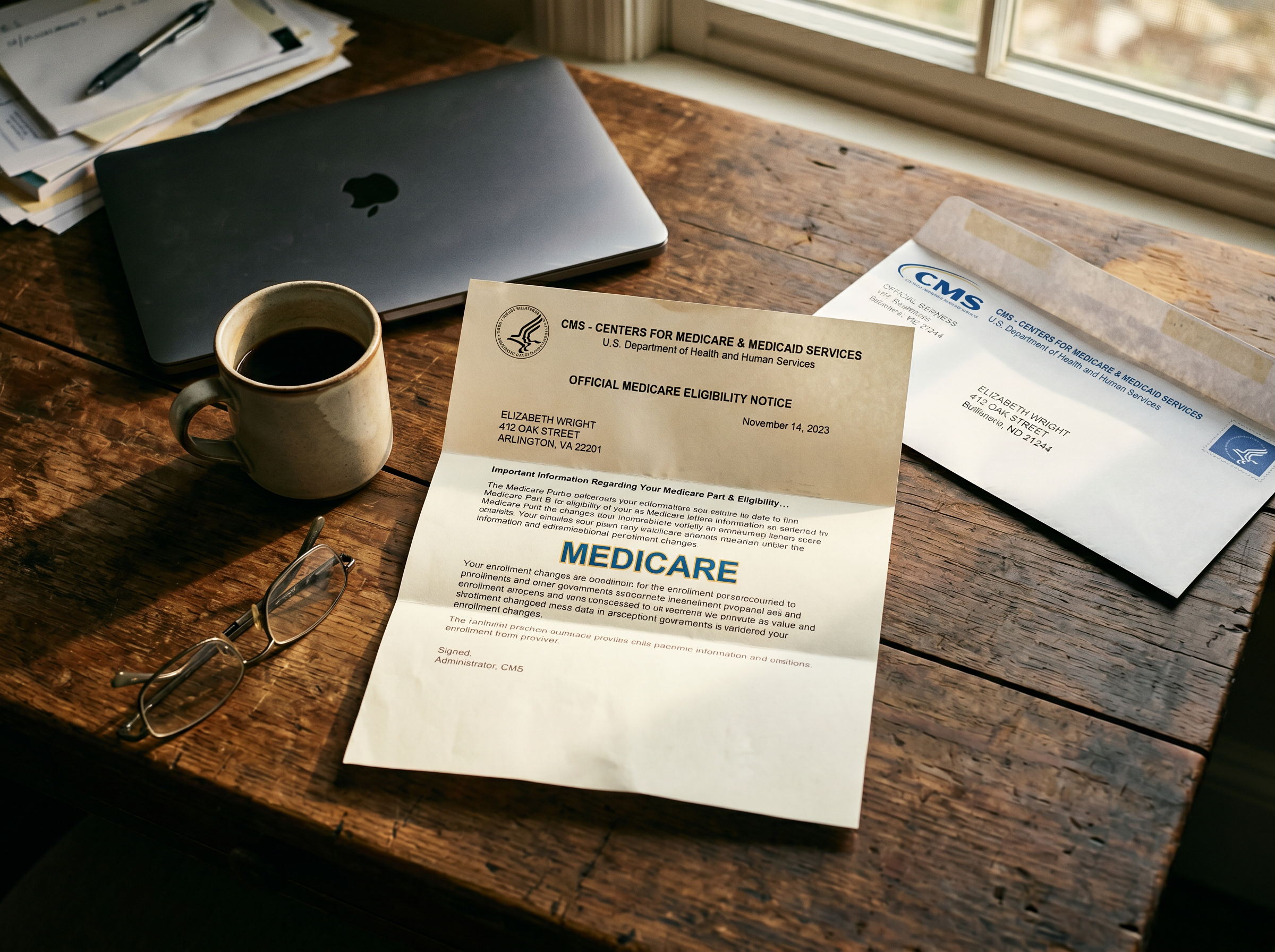
A CMS Medicare letter and envelope on a wooden desk — the moment a clawback letter arrives
42 CFR § 405.371

The statute that lets CMS take your money first, and tell you later.

Most agency owners learn this the hard way. The Code of Federal Regulations gives the Centers for Medicare and Medicaid Services three distinct ways to claw back payments — and the most aggressive one requires no court order, no appeal, and no prior notice.

Move 1Payment Suspension (Suspected Fraud)

Triggered by a "credible allegation of fraud" — defined broadly enough to include a complaint hotline tip, a UPIC data anomaly, or a competitor's report. No prior notice required. The OIG reports 99% of fraud-based suspensions are imposed before the provider is even informed.

The 2025 DOJ National Health Care Fraud Takedown blocked $4 billion in payments using exactly this authority. Suspension can run up to 180 days plus extensions. DOJ can extend it beyond 18 months if the case is still active.

Move 2Payment Suspension (Overpayment)

Limited prior notice required, but the practical effect is the same: the agency's claims stop paying. CMS uses this when the case is administrative rather than criminal — but the cash-flow impact on a small agency is identical.

Move 3Recoupment / Offset

New claims dollars are withheld and applied to a prior alleged overpayment. Recoupment begins on Day 41 after the demand letter. The 2025 Final Rule starts the 60-day self-disclosure clock the moment a provider "should know" about an overpayment — meaning the agency is on the hook the day they have constructive knowledge, not the day they're certain.

The Bank-Freeze Analogy

Think of it like a bank freezing your account because someone reported suspicious activity. Except the "bank" is also the government, there's no appeals court, and the freeze can last up to two years while they investigate. By the time you get the rebuttal letter, you've already missed payroll.

The four programs

Four contractors. Four different ways to lose your money.

01
TPE — Targeted Probe & Educate

Run by your Medicare Administrative Contractor (MAC)

Your MAC — CGS, NGS, or Palmetto depending on jurisdiction — pulls a sample of 20 to 40 of your claims. If your denial rate is above their threshold (15% to 25%), you fail the round. Three rounds. Failing all three escalates to UPIC or SMRC referral.

  • CGS data: 43% of reviewed home health claims don't support medical necessity
  • Ohio Probe 1 denial rate: 41%. Texas: 32%. Indiana: 27.96%
  • Average TPE legal/consulting defense: $5,000 to $10,000
02
ADR — Additional Documentation Request

30 days. Day 46 = automatic denial.

An ADR letter arrives. The agency has 30 to 45 days to produce documentation supporting a sample of claims. Miss the deadline by even a day — Day 46 — and the claim is automatically denied. UPIC-issued ADRs sometimes give only 15 days.

  • Most commonly missed documents: physician signatures, homebound status, medical necessity evidence
  • One ADR letter can cover 50 to 200 claims at once
  • If documentation isn't airtight on visit identity, the denial cascade has already started
03
RAC — Recovery Audit Contractor

Three-year lookback. Contingency-fee structure.

RAC contractors get paid a percentage of what they recover. Region 5 — Performant Recovery — handles all home health nationally. They mine three years of claim data, identify patterns, and issue extrapolated demands. A 30-claim sample failure can turn into a six-figure repayment demand applied to thousands of claims.

  • Contingency fees create aggressive findings — there's no incentive to be conservative
  • RAC findings are appealable but appeals take 12 to 36 months
  • During appeal, recoupment continues offsetting active claims
04
UPIC — Unified Program Integrity Contractor

The fraud hunter. The one to actually fear.

UPICs are the descendants of the old ZPICs — federal contractors whose entire job is to find fraud. They have authority to issue ADRs, conduct site visits, recommend payment suspension, refer cases for criminal prosecution, and demand statistically extrapolated repayments running into the hundreds of thousands to millions.

  • Florida / Tennessee: SafeGuard Services Southeast
  • Texas: Qlarant Southwest
  • Ohio / Indiana: CoventBridge Midwest
  • Escalation path: education letter → ADR → extrapolation → payment suspension → law enforcement referral
The cash-flow death spiral

What kills agencies isn't the audit. It's the wait.

Once on prepayment review, payment cycles shift from 30 to 45 days into 90 to 120 days per claim. For a $200K-per-month biller, that's a $400K to $600K cash gap that opens before the first hearing.

Normal payment cycle30 to 45 days
Prepayment review cycle90 to 120 days
Cash gap, $200K/mo biller$400K to $600K
FCA penalty per claim, 2025$13,508 to $27,018
Treble damages multiplier3× actual loss
Initial legal defense floor$5K to $10K

House Ways & Means testimony, April 2026: "Medicare payments continued to be made with limited real-time verification and still resemble a pay-and-chase model that pays claims first and recovers payments later, if ever."

State-by-state aggression map

Where you operate determines how hard you'll get hit.

Florida
Very Aggressive
UPIC: SafeGuard SE

307 site visits per year. 704 law enforcement referrals. $236M prevented through pre-payment intervention.

Texas
Escalating
UPIC: Qlarant SW

$125M recovered in 2025 alone. Texas OAG actively using DOGE data to mine claim anomalies.

Ohio
Very High
UPIC: CoventBridge MW

8 major indictment batches since summer 2025. New data-mining infrastructure in 2026. 41% TPE Probe 1 denial rate.

Indiana
Moderate (Rising)
UPIC: CoventBridge MW

$200M attendant care recoupment demand issued April 2026. 27.96% TPE denial rate.

Tennessee
Moderate
UPIC: SafeGuard SE

Same fraud-team contractor as Florida — investigative infrastructure already on the ground.

These aren't hypothetical

Five agencies who learned the statute the hard way.

HRS Home Health · IL · 2025

$100K demand from a 100-claim sample.

OIG sampled 100 of 18,422 claims, found documentation issues on 20. Extrapolated. Final demand: $100,696.

Outcome: Demand sustained on appeal
5 Stars Home Health · ME · 2026

Agency dissolved before settlement.

65%+ documentation error rate. MaineCare issued a $390K demand. Owner walked away — agency disappeared.

Outcome: Total business loss
Anonymized FL HHA · 2018

Failed ZPIC. Billing shut down same week.

Large health-system home health agency failed a ZPIC audit. Immediate billing shutdown imposed. Came within weeks of closure before McBee restored compliance.

Outcome: Survived — but barely
Faith Newton / Arbor Homecare · MA

$100M scheme. 12 years federal prison.

Personal care services billing fraud. Convicted on FCA + criminal charges. Restitution: $100M. Sentence: 12 years.

Outcome: Federal prison
ComfortZone Home Care · PA · 2026

20 charged. Owner: 23 months prison.

Pennsylvania AG, March 2026. Twenty defendants. CEO sentenced to 11.5 to 23 months incarceration. $1.76M restitution.

Outcome: Federal sentencing
Anonymous Hospice · 2016

5 patients. Total payment suspension. Closed.

ZPIC audit findings on five patient files. No fraud allegation issued. Full payment suspension imposed. Hospice unable to make payroll. Doors closed.

Outcome: Permanent closure
What VisitLock actually does

The evidentiary shield that prevents the audit from starting.

VisitLock isn't fraud insurance. It's the documentation layer that prevents a UPIC from having grounds to suspect fraud in the first place. The difference between "here's biometric proof of every visit" and "here's the same falsified-records pattern that just got a Houston owner 75 months in federal prison" is the entire ROI argument.

Visit identityBiometric face match · cryptographic token
Audit packet export1-click for any 90-day window
Documentation gapsSurfaced before claim submission
FCA defense postureTamper-proof timestamp on every visit
Identity rotation blockOwner-approved re-enrollment only
Anomaly detectionTravel-time, GPS spoof, impossible-shift flags

The audit doesn't start when the letter arrives.

It starts the day an aide didn't show up and you billed anyway. Make sure that day never happens.

Book a Demo
20-minute walkthrough · State-specific risk profile included
Sources

42 CFR § 405.371 · DOJ June 2025 Takedown via HHCN · NY State Comptroller / Rivkin Radler · KFF — Medicaid Home Care Fraud Enforcement · Wachler Associates — FCA 2025 · OIG / HRS Audit via HHCN · National Law Review — ZPIC hospice closures · PA AG — ComfortZone sentencing · Weiss Zarett — Prepayment Review